System design
Build architectures from real components and see latency, reliability, throughput, and cost respond in real time.
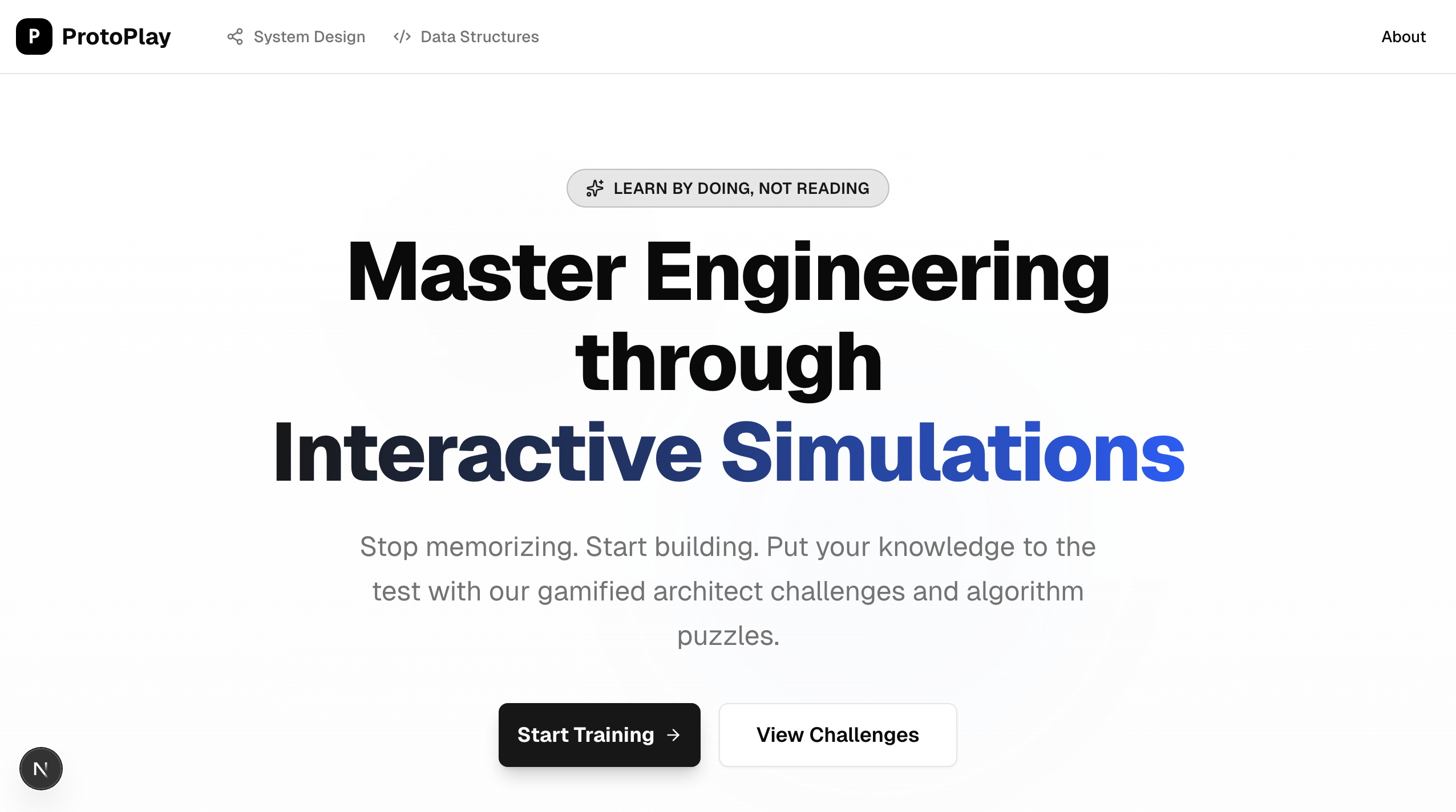
Computer science education often explains the finished answer without letting learners feel how the system changes. ProtoPlay reframes each topic as a small environment: a clear goal, a focused control set, visible feedback, and enough context to understand why the result changed.
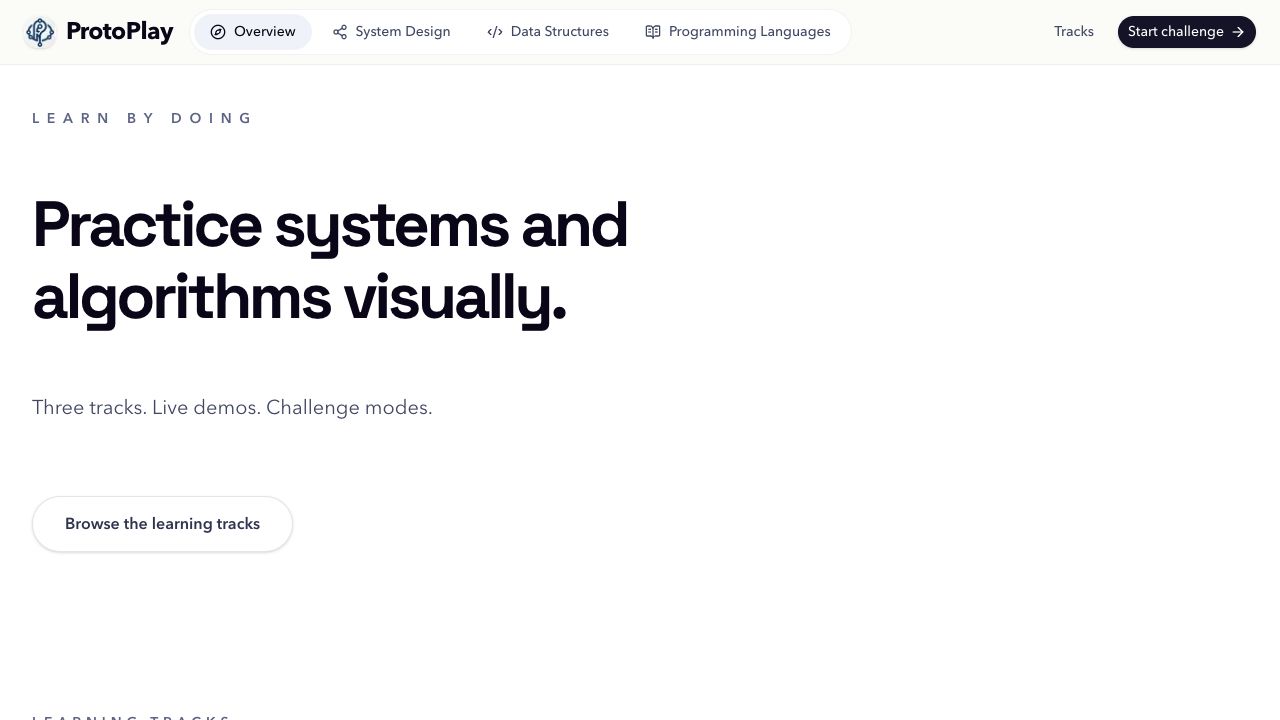
The homepage gives each track its own identity while the lesson pages keep navigation, explanations, and interactive modules predictable. Learners can browse in order or jump directly to the topic they need.
Build architectures from real components and see latency, reliability, throughput, and cost respond in real time.
Turn pointers, graphs, trees, arrays, and hashing into visual drills that can be manipulated instead of memorized.
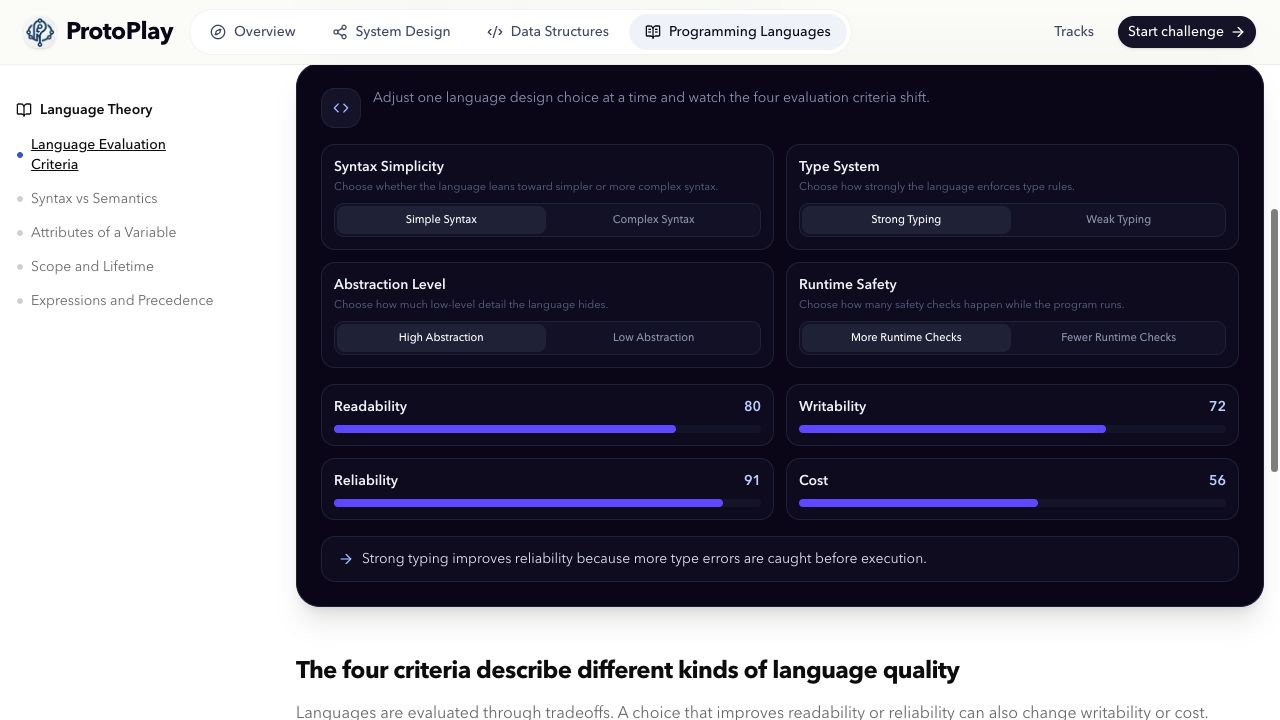
Explore how syntax, typing, abstraction, and runtime safety change readability, writability, reliability, and cost.
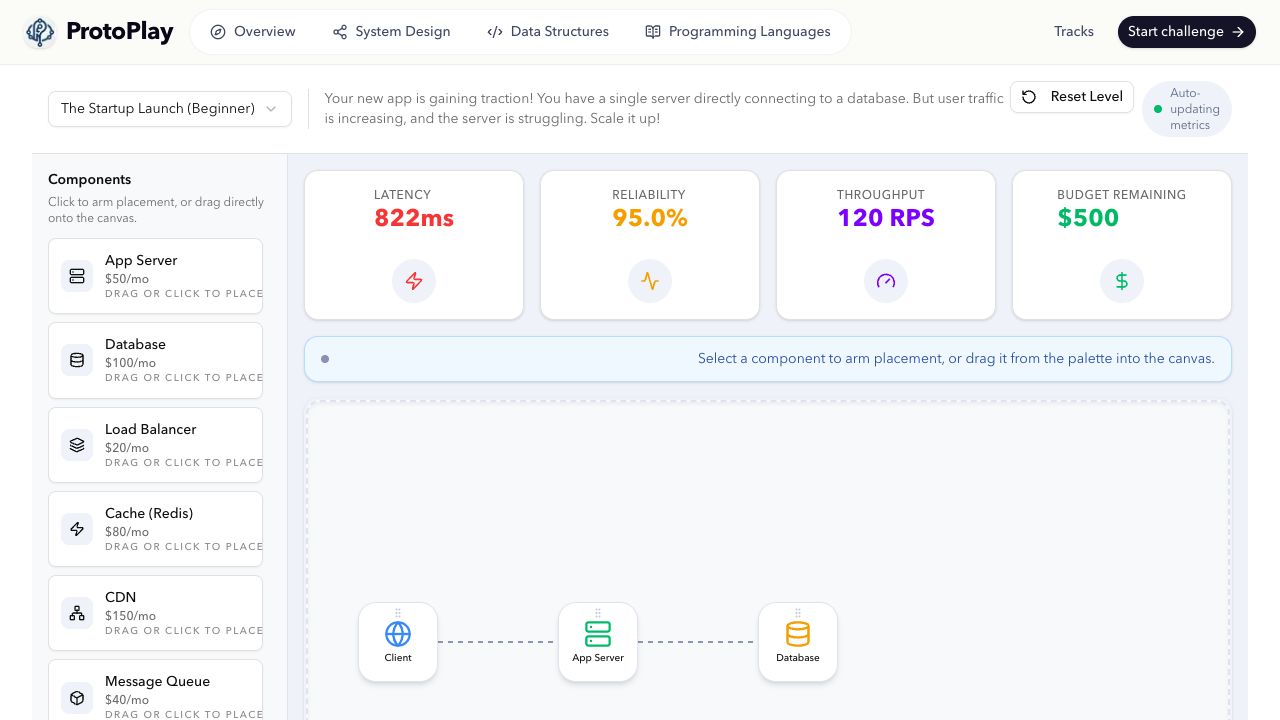
The System Architect Challenge starts with a client, an application server, and a database. Learners add infrastructure from a component palette while live metrics reveal how every choice affects performance, reliability, throughput, and budget.
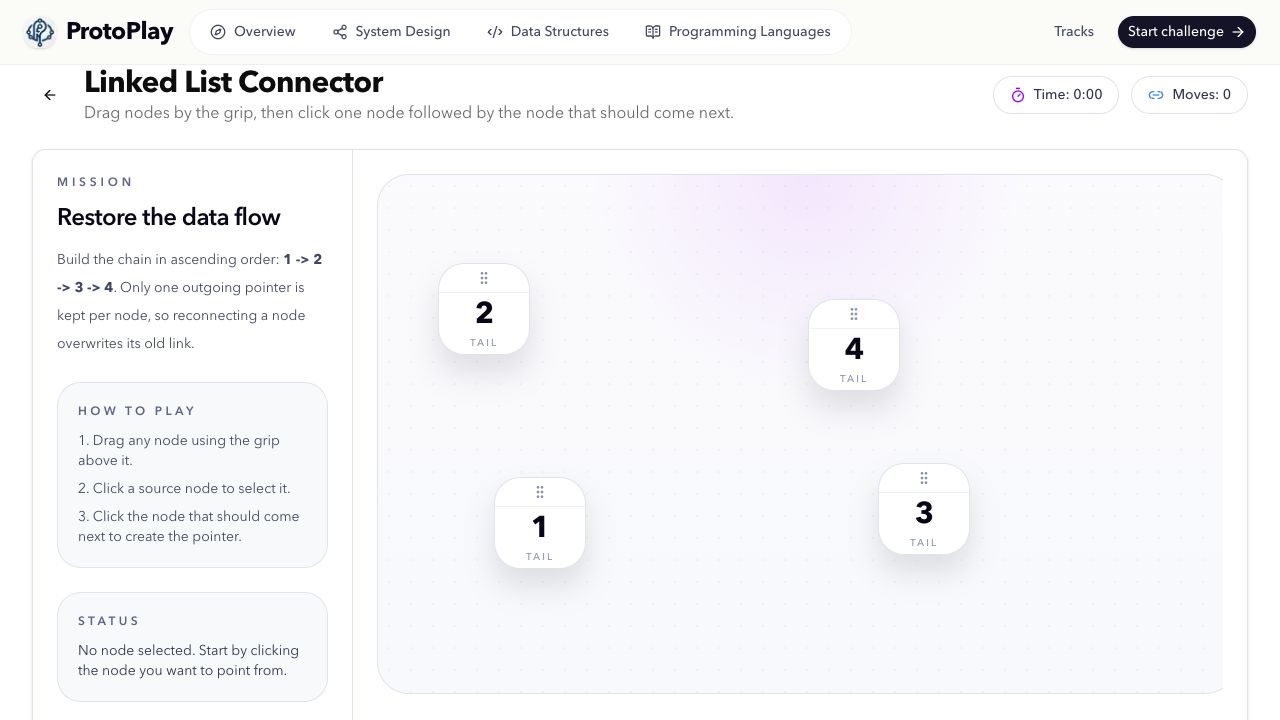
The Linked List Connector turns pointer logic into a spatial puzzle, while the language-design simulator makes tradeoffs between readability, writability, reliability, and cost visible. Both keep the mission, controls, and feedback in the same field of view.
ProtoPlay now connects three computer-science tracks through a shared visual language and a repeatable lesson pattern. The foundation supports more topics, richer challenge states, progress tracking, and future learner testing without changing the core promise: understand it by interacting with it.