Prepare the signal
Normalize free-text requests, preserve the details that distinguish categories, and turn the original helpdesk records into a consistent training set.
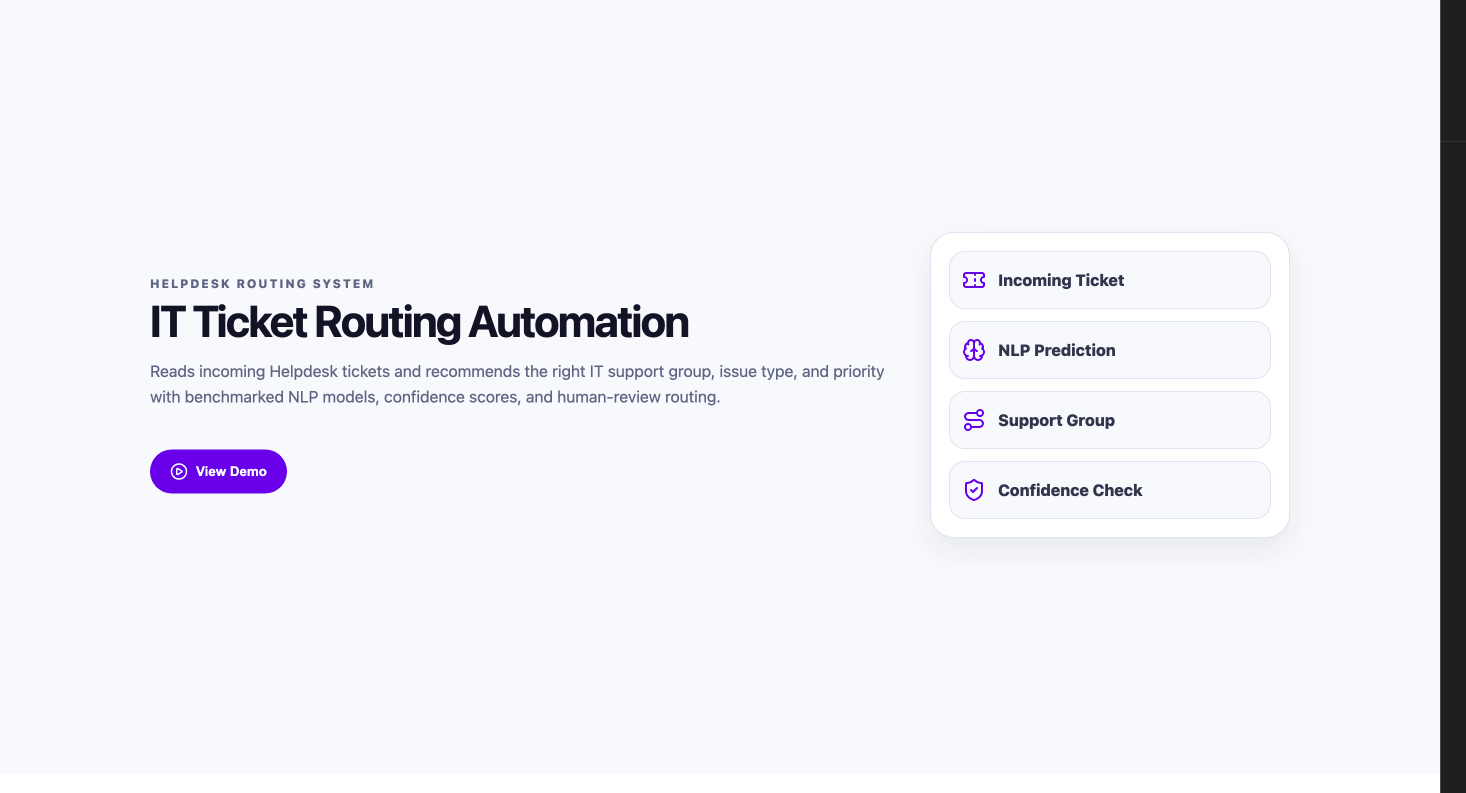
Helpdesk requests arrive as inconsistent, human-written descriptions. Manual triage adds delay, and a wrong route creates another handoff. The project treats routing as a multi-output classification problem while making model confidence visible for review.
The workspace keeps submission and model output side by side. A user can rewrite the prompt, route the ticket, inspect the prediction, and understand how much trust to place in the recommendation without leaving the page.
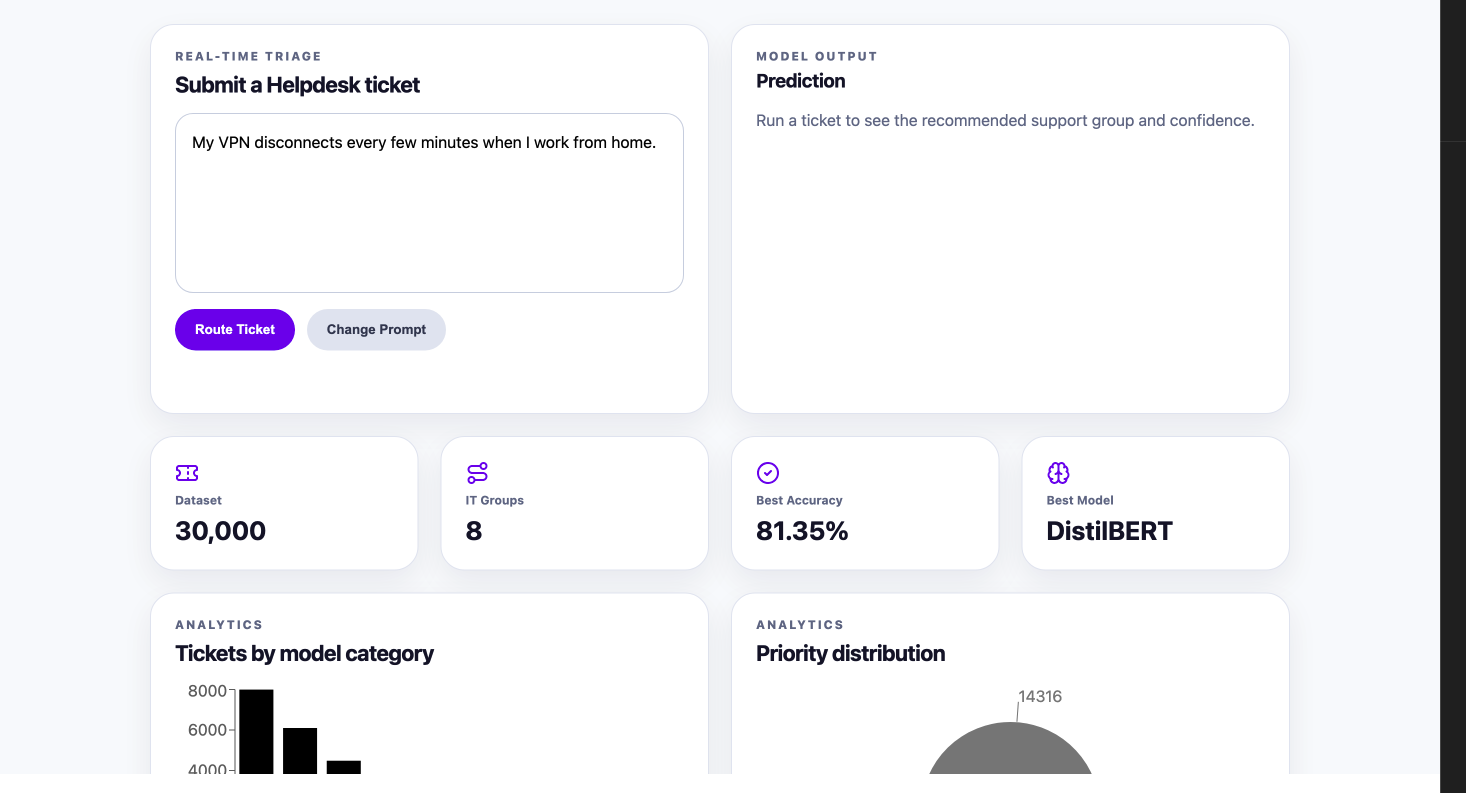
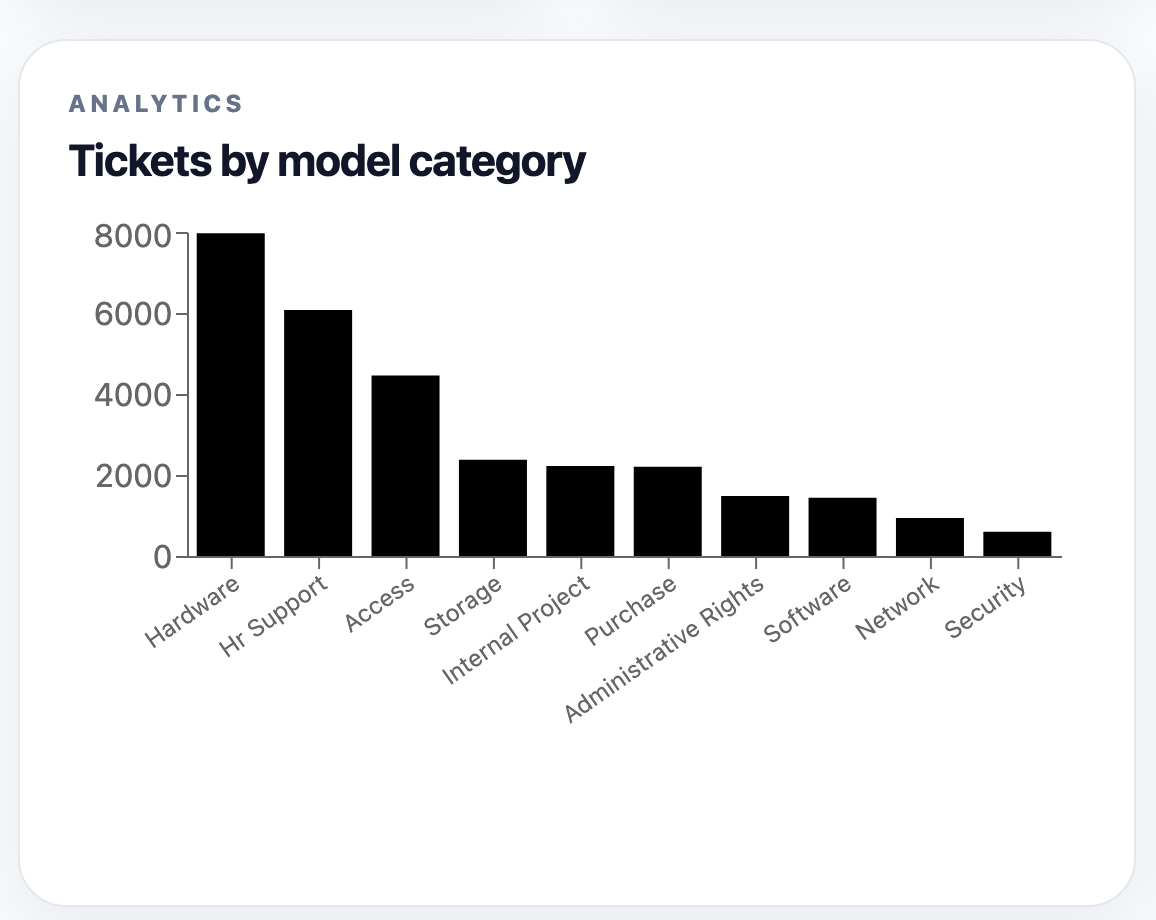
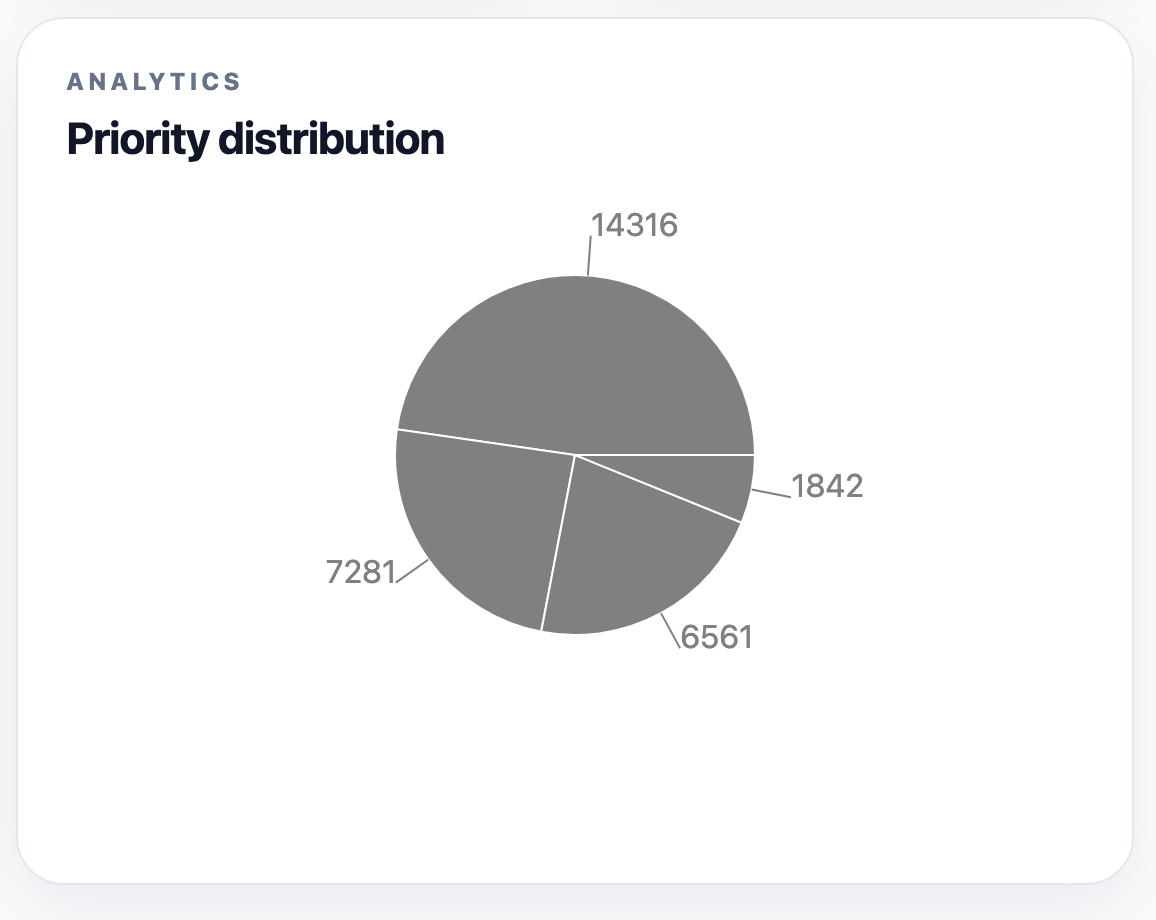
Category volume reveals where the dataset is dense or imbalanced, while priority distribution shows the operational mix the model must learn. Keeping these views near the prediction tool makes model performance easier to interpret in context.
Accuracy is only one part of an operational ML product. The system also needs reliable data preparation, comparable evaluation, fast serving, and a clear path for low-confidence cases.
Normalize free-text requests, preserve the details that distinguish categories, and turn the original helpdesk records into a consistent training set.
Compare classical and transformer-based NLP approaches against the same routing task instead of choosing a model from intuition alone.
Return confidence alongside each recommendation so uncertain tickets can be reviewed instead of silently routed to the wrong team.
The finished workflow connects dataset analysis, model comparison, API inference, and a human-readable dashboard. It turns an NLP experiment into a deployable tool that can shorten triage while keeping the final routing decision understandable.